

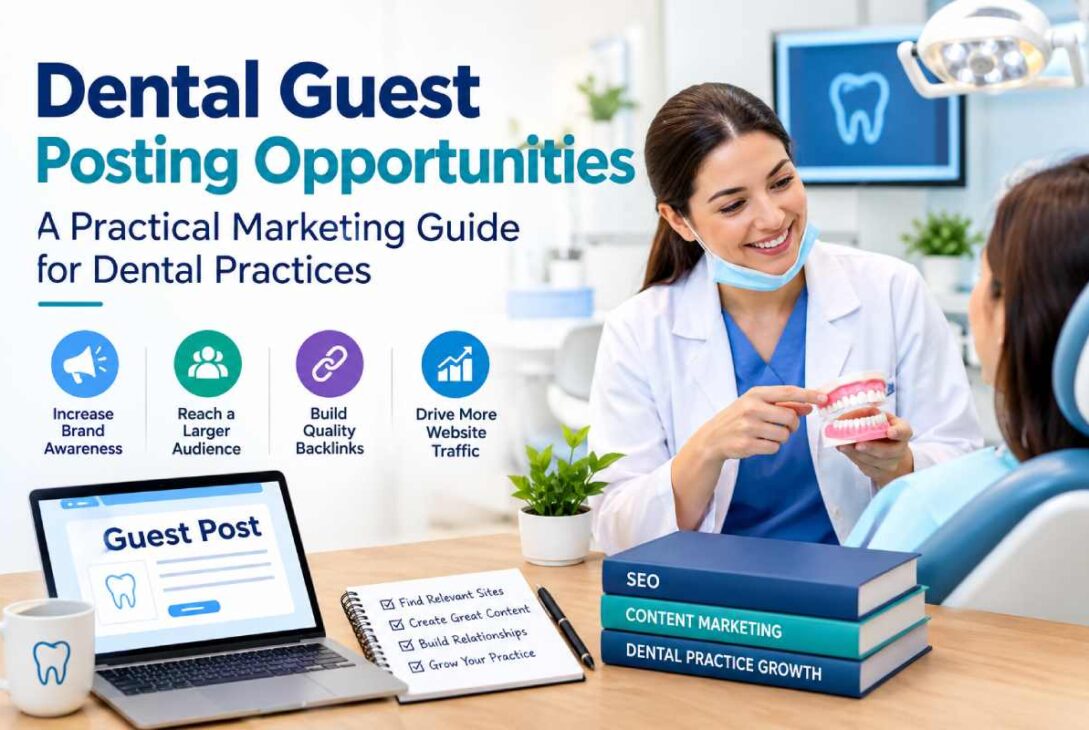
For a dental practice, useful marketing content does more than announce services. It helps people understand oral health, feel more confident about treatment and recognize when it may be time to book an appointment. Guest posting can extend that work beyond a practice’s own website, introducing its expertise to readers who already follow health and lifestyle publications. The value of dental guest posting opportunities depends less on the number of placements than on whether the publication, topic and audience are a good fit.
Start with the audience, not the placement
A site that accepts contributed articles is not automatically the right place for a dental practice. Before pitching, consider who reads it, what subjects it covers and whether its editorial standards suit healthcare information. A family-focused publication may be a natural home for a piece about children’s first dental visits. A wellness readership may respond better to an evidence-informed explanation of oral hygiene habits or the relationship between everyday routines and dental health.
Relevance matters for readers as well as search visibility. A useful article should answer a question the publication’s audience might genuinely have. If the connection between the topic and the host site feels forced, readers are unlikely to trust the content, and the practice’s name may not leave a meaningful impression.
Marketers evaluating possible outlets can use a directory of dental guest posting websites as a starting point. Treat any list as a prospecting resource rather than a substitute for research: review each publication’s current content, audience, editorial requirements and commercial terms before committing to a pitch.
Choose topics that earn attention
Dental expertise can support a wide range of reader-first subjects, but the best pitch is usually specific. Broad topics such as “the importance of oral health” are difficult to make distinctive. A clearer angle gives the editor a better sense of the article’s value and helps the writer avoid a generic overview.
- Patient education: Explain what patients can expect during a routine check-up, how to care for teeth between visits or what questions to ask before a common procedure.
- Family dental care: Offer practical guidance for building brushing routines with children, preparing for an initial appointment or adapting oral care as family needs change.
- Myth clarification: Address a common misconception carefully, distinguishing established guidance from claims that need individual clinical advice.
- Practice management: Discuss how a clinic can make appointments more accessible, communicate treatment plans clearly or improve the experience for anxious patients.
Clinical topics require particular care. A guest article should not promise a result, diagnose a reader or replace advice from a qualified dental professional. When the subject involves treatment, symptoms or risk, have a clinician review the draft for accuracy and appropriate qualifications. That review protects readers and helps the practice maintain a consistent, responsible voice.
Build a sound editorial process
Guest posting works best when it is treated as a small publishing program, not a one-off link exercise. Start with a short brief that identifies the intended reader, the question the piece will answer, the practice’s perspective and any claims requiring clinical confirmation. Agree on the publication’s format and word count before drafting, and check whether it permits a brief author biography or a relevant link.
Keep the article useful even if a reader never clicks through to the practice website. An informative contribution earns credibility on its own; an article written mainly to promote a clinic can weaken that credibility. Avoid inserting service descriptions where they do not help explain the topic. The practice’s expertise should be evident in the clarity and care of the information, not just in brand mentions.
Publishing requirements can vary widely. Some editors expect original work and may request revisions; others have specific rules for citations, author credentials, images or links. Confirm those details up front, along with any fees and expected publication timing. A placement’s price alone does not establish its value. Consider audience fit, editorial quality and the effort needed to produce a responsible article.
Measure more than backlinks
A published guest post can contribute to awareness, referral visits and a practice’s reputation as a helpful source. Set realistic objectives before launching a campaign. If the priority is patient education, track engagement and the quality of reader response. If the goal is to reach a new local audience, consider whether the publication serves that area and whether the article gives readers a relevant next step.
Record the publication, topic, date, cost and any resulting activity. Over time, this makes it easier to identify which themes and outlets are worth pursuing. A small number of well-matched contributions may be more useful than a large volume of placements on sites with little editorial relevance.
Plan capacity for consistent publishing
Researching outlets, pitching editors, drafting and arranging clinical review all take time. A practice should decide which parts its internal team can handle and where specialist support would help. Freelancers may assist with research, writing or editing, but healthcare experience and a reliable review process remain important. The practice must retain responsibility for clinical accuracy and approval.
When comparing providers, look for clear scopes, realistic timelines and transparent costs. A fair freelance marketplace such as Osdire can be one place to explore services across writing and marketing, among other categories. As with any hiring route, assess a freelancer’s relevant experience, agree on deliverables and establish who will review the work before publication.
Guest posting is most effective when it supports a broader content strategy: answer real patient questions, publish carefully reviewed material and choose outlets for their readers rather than a metric alone. With that foundation, each contribution can build trust beyond the practice’s own channels while giving potential patients something genuinely useful to take away.
Also Read: ULIP Calculator: Estimate Your Returns Before You Invest