

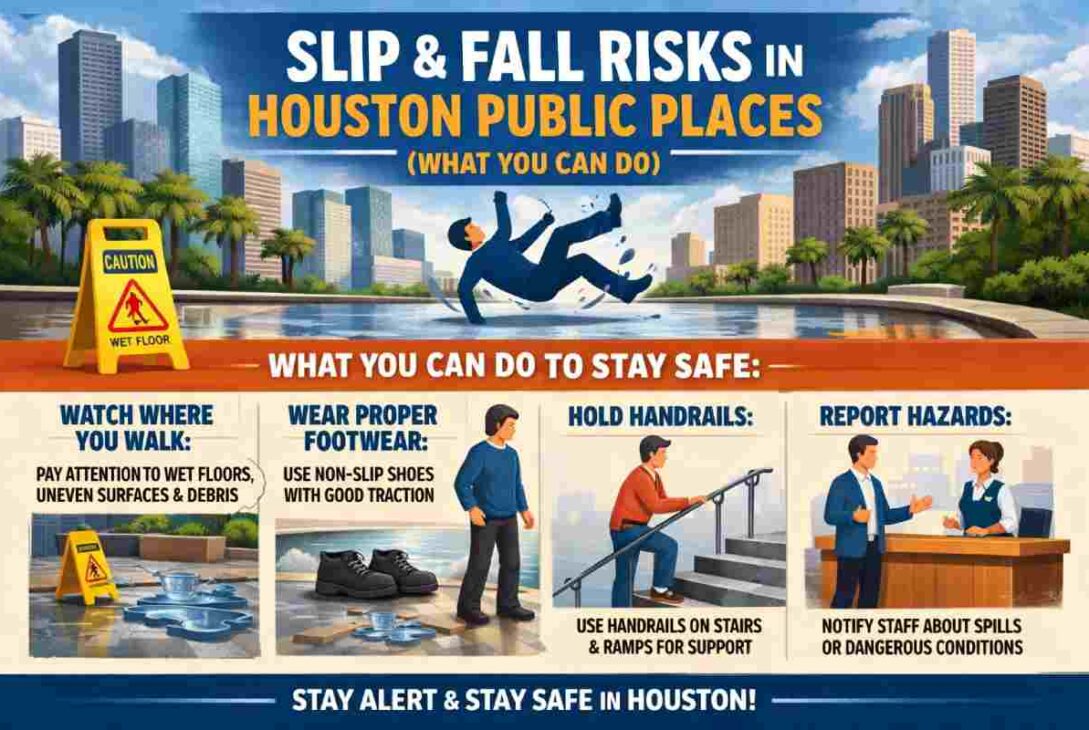
Houston’s bustling public spaces, from shopping malls and grocery stores to parks and transit stations, see millions of visitors annually. But beneath the city’s vibrant atmosphere lurks a persistent danger: slip and fall accidents. According to the National Floor Safety Institute, falls account for over 8 million emergency room visits each year in the United States, making them the leading cause of ER admissions. In Texas alone, premises liability claims related to falls represent a significant portion of personal injury cases, with Houston leading due to its dense urban infrastructure and high foot traffic.
Understanding the risks, legal responsibilities, and your rights after a slip and fall accident in Houston can mean the difference between mounting medical bills and fair compensation. This guide breaks down the safety hazards you face, who’s legally responsible when accidents happen, and the exact steps to protect your claim.
Common Slip & Fall Hazards in Houston Public Places
Houston’s diverse public spaces present unique safety challenges. The Centers for Disease Control and Prevention (CDC) reports that falls cause over 36,000 deaths annually nationwide, with older adults at highest risk. But hazardous conditions don’t discriminate by age. Here are the most common culprits in Houston:
Wet or Slippery Floors:
Texas weather creates constant moisture issues. Sudden rainstorms leave entrances slick, while overzealous cleaning without proper signage creates invisible hazards. Grocery stores, restaurants, and retail spaces see the highest incident rates.
Uneven Surfaces:
Houston’s aging infrastructure means cracked sidewalks, potholed parking lots, and uneven flooring plague many public areas. The city’s expansive Medical Center and downtown districts report frequent trip-and-fall incidents due to deteriorating walkways.
Poor Lighting:
Dim stairwells, shadowy parking garages, and inadequately lit pathways obscure hazards. According to Occupational Safety and Health Administration (OSHA) standards, proper illumination is critical for fall prevention, yet many Houston establishments fail to meet these benchmarks.
Debris and Obstacles:
Merchandise left in aisles, extension cords across walkways, or construction materials in pedestrian zones create tripping hazards. Big-box retailers and under-renovation properties are frequent offenders.
Weather-Related Conditions:
While Houston rarely sees ice, rain-slicked outdoor seating areas, pool decks, and entryways become treacherous. Property owners must respond quickly to changing conditions.
A discussion on Reddit’s r/houston community highlights real experiences: users share stories of falls at major shopping centers, with several noting that stores often blame victims rather than addressing safety violations.
Who’s Responsible for Slip and Fall Injuries?
Texas premises liability law determines who pays when you’re injured on someone else’s property. Understanding these legal responsibilities is crucial for any Houston slip and fall claim.
Property Owner Duties:
Under Texas law, property owners and occupiers owe different duties depending on your legal status. If you’re a business invitee (customer), owners must:
- Regularly inspect for hazards
- Repair dangerous conditions promptly
- Warn visitors of non-obvious dangers
- Maintain safe premises through reasonable care
The “Knew or Should Have Known” Standard:
Texas courts require proof that the property owner either knew about the hazard or should have discovered it through reasonable inspection. This is where timing becomes critical. If a spill occurred 30 seconds before your fall, liability may be limited. But if it sat for hours while staff walked past, negligence becomes clear.
Comparative Negligence Rules:
Texas follows a modified comparative fault system. If you’re found 51% or more responsible for your fall (perhaps texting while walking), you cannot recover damages. If you’re 30% at fault, your compensation reduces by that percentage. This makes documenting conditions and your actions essential.
For detailed analysis of who’s responsible for slip and fall injuries, Texas law creates specific obligations that vary by property type and visitor status.
What Are the Most Common Injuries from Slip and Fall Accidents?
The physical and financial toll of slip and fall accidents often surprises victims. The National Safety Council reports that falls result in over $50 billion in medical costs annually.
Traumatic Brain Injuries (TBIs):
Head impacts cause concussions, skull fractures, and severe brain trauma. These injuries may not show symptoms immediately but can lead to long-term cognitive issues.
Spinal Cord Damage:
Back and neck injuries range from herniated discs to paralysis. Treatment often requires surgery and extensive rehabilitation.
Broken Bones:
Wrist fractures from bracing falls, hip fractures in older adults, and ankle breaks are common. Hip fractures alone carry a 20% mortality rate within one year for seniors, according to CDC data.
Soft Tissue Injuries:
Sprains, strains, and tears may seem minor but can cause chronic pain and mobility limitations. These injuries frequently complicate workers’ ability to return to employment.
Economic Impact:
Beyond medical bills, victims face lost wages, reduced earning capacity, and diminished quality of life. The average slip and fall claim in Texas ranges from $20,000 to over $100,000 depending on injury severity.
Steps to Protect Your Rights After a Slip and Fall
What you do immediately after falling determines the strength of your legal claim. Follow this step-by-step guide for slip and fall injuries:
- Seek Medical Attention Immediately: Even if you feel fine, internal injuries and delayed-onset conditions require professional evaluation. Gaps in treatment give insurance companies ammunition to deny claims.
- Document Everything: Use your phone to photograph:
- The exact location and hazard that caused your fall
- Surrounding conditions (lighting, signage, weather)
- Your injuries
- Clothing and footwear
- Report the Incident:
Notify the property owner or manager in writing. Request a copy of the incident report. Many businesses try to downplay accidents, insist on official documentation.
- Gather Witness Information:
Bystanders provide crucial third-party accounts. Get names, phone numbers, and brief statements if possible.
- Preserve Evidence:
Keep the clothes and shoes you wore. Don’t repair or discard anything related to the fall.
- Avoid Giving Recorded Statements:
Insurance adjusters will contact you quickly, seeking statements that minimize their liability. Politely decline until you’ve consulted legal counsel.
- Contact a Houston Slip and Fall Lawyer:
Texas’s two-year statute of limitations for personal injury claims seems generous, but evidence disappears quickly. Security footage is often overwritten within 30 days. Early legal representation preserves critical proof.
A qualified Houston slip and fall lawyer understands local court precedents, knows which experts to engage, and can counter insurance company tactics that devalue legitimate claims.
How Do You Prove a Slip and Fall Case in Houston?
Winning a premises liability claim requires establishing four elements:
Duty: The property owner owed you a duty of care based on your status as an invitee, licensee, or trespasser.
Breach: The owner failed to maintain safe conditions or warn of hazards.
Causation: The breach directly caused your injuries.
Damages: You suffered quantifiable harm (medical bills, lost income, pain and suffering).
Evidence That Strengthens Claims:
- Surveillance footage showing the hazard existed before your fall
- Maintenance records revealing neglected repairs
- Prior incident reports at the same location
- Expert testimony on industry safety standards
- Medical records linking injuries to the fall
Common Defense Tactics: Property owners and their insurers often argue:
- The hazard was “open and obvious”
- You were distracted or careless
- Your injuries pre-existed the fall
- The condition was temporary and unavoidable
Skilled legal representation anticipates and counters these defenses with thorough investigation and expert analysis.
Legal Responsibilities of Property Owners in Houston
Texas Property Code and common law establish clear safety obligations. Property owners must:
Regular Inspections:
Implement routine safety checks appropriate to the property type. A grocery store requires hourly floor inspections, while office buildings may inspect daily.
Prompt Repairs:
Address known hazards within a reasonable timeframe. What’s “reasonable” depends on danger severity, a broken handrail demands faster action than a cosmetic floor crack.
Adequate Warnings:
When hazards cannot be immediately fixed, conspicuous warnings are mandatory. Wet floor signs must be visible from multiple approaches, not tucked in corners.
Proper Training:
Staff must know hazard identification, spill cleanup protocols, and incident reporting procedures.
Compliance with Building Codes:
Houston’s building standards, fire codes, and ADA requirements aren’t optional. Violations that contribute to falls strengthen liability claims.
According to a Houston Chronicle investigation, code enforcement in Houston struggles with the city’s rapid growth, leaving many properties in non-compliant conditions despite complaint backlogs.
Why You Need a Houston Personal Injury Attorney
Insurance companies are not on your side. Their goal is minimizing payouts, not fairly compensating victims. Here’s what a personal injury attorney Houston provides:
Accurate Claim Valuation:
Experienced attorneys calculate total damages including future medical needs, long-term disability impacts, and non-economic suffering, factors insurance adjusters ignore.
Investigation Resources:
Law firms employ investigators, work with medical experts, and access surveillance footage before it disappears.
Negotiation Power:
Attorneys understand settlement tactics and can counter lowball offers with evidence-backed demands.
Trial Readiness:
Most claims settle, but insurers take attorneys willing to litigate seriously. The threat of trial increases settlement values.
Contingency Fee Structure:
Reputable personal injury firms work on contingency—you pay nothing unless you win. This aligns attorney motivation with your maximum recovery.
Take Action to Protect Your Rights
Slip and fall accidents in Houston public places are not just unfortunate incidents—they’re often preventable failures of property owner responsibility. With falls causing over 8 million ER visits annually nationwide and costing victims billions in medical expenses, understanding your rights is essential.
If you’ve been injured in a slip and fall accident:
- Seek immediate medical care
- Document conditions thoroughly
- Report the incident officially
- Consult a specialized Houston slip and fall lawyer before giving statements to insurance companies
Texas law provides two years to file personal injury claims, but waiting jeopardizes evidence preservation and claim strength. Property owners and their insurers count on victims accepting blame or settling for inadequate amounts. Don’t let their negligence become your financial burden.
Your health, finances, and future deserve protection. Understanding slip and fall risks in Houston public places empowers you to recognize hazards, demand accountability, and secure the compensation you deserve when negligence causes harm.
Also Read: Pitch Deck Consulting and the Psychology of “Yes”